

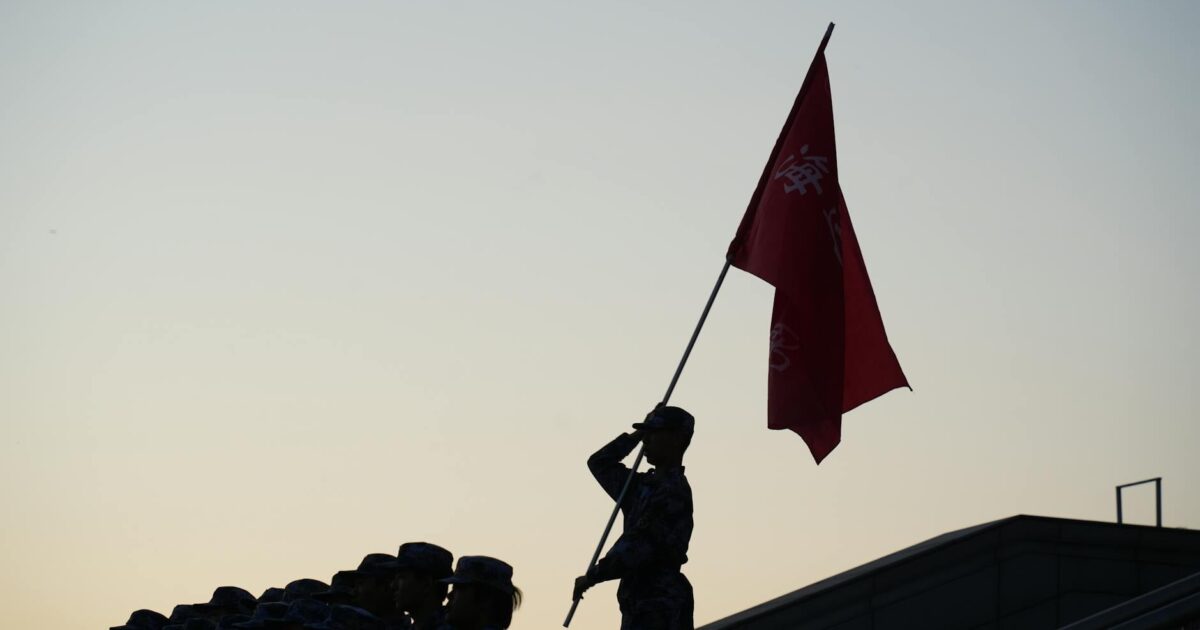
In a shocking turn of events, Japan has openly rejected the notion of ‘new militarism’, accusing China of lacking military transparency and emphasizing the importance of dialogue for regional stability. According to recent reports, China’s military spending has increased by 7.1% in the past year alone, sparking concerns among neighboring countries. As tensions rise in the Asia-Pacific region, Japan’s bold stance has sent a clear message to China and the international community.
- Japan rejects ‘new militarism’ and emphasizes the importance of dialogue for regional stability
- China’s military spending has increased by 7.1% in the past year, sparking concerns among neighboring countries
- Japan’s Defense Minister, Yasukazu Hamada, has called for greater military transparency from China
Background and Context
The recent tensions between Japan and China can be attributed to a combination of factors, including China’s rapid military expansion and Japan’s concerns over regional stability. According to a report by the Stockholm International Peace Research Institute (SIPRI), China’s military spending has increased by 7.1% in the past year, reaching a total of $293 billion. This significant increase in military spending has sparked concerns among neighboring countries, including Japan.
China’s Military Expansion
China’s military expansion has been a major point of concern for Japan and other neighboring countries. China’s military has been rapidly modernizing, with a focus on developing advanced technologies such as stealth fighters, aircraft carriers, and ballistic missiles. This rapid modernization has raised concerns over China’s intentions and its potential impact on regional stability.
Japan’s Response
In response to China’s military expansion, Japan has been strengthening its own military capabilities. Japan’s Defense Minister, Yasukazu Hamada, has called for greater military transparency from China, emphasizing the importance of dialogue and cooperation for regional stability. Japan has also been strengthening its alliances with other countries, including the United States, to counterbalance China’s growing military influence.
“We will continue to work closely with our allies and partners to promote regional stability and security, while also maintaining our own military capabilities to deter any potential threats.”
— Yasukazu Hamada, Japan’s Defense Minister
Regional Implications
The tensions between Japan and China have significant implications for the region. The Asia-Pacific region is home to some of the world’s most rapidly growing economies, and any conflict or instability in the region could have far-reaching consequences. According to a report by the International Monetary Fund (IMF), the Asia-Pacific region accounts for over 40% of global trade, making it a critical component of the global economy.
Economic Implications
The tensions between Japan and China could have significant economic implications for the region. A conflict or instability in the region could disrupt trade flows, impact investment, and slow economic growth. According to a report by the World Bank, a 10% decline in trade flows in the Asia-Pacific region could result in a 2.5% decline in regional GDP.
Security Implications
The tensions between Japan and China also have significant security implications for the region. A conflict or instability in the region could lead to a destabilization of the regional security architecture, potentially drawing in other countries and escalating the situation. According to a report by the Center for Strategic and International Studies (CSIS), the Asia-Pacific region is home to several potential flashpoints, including the South China Sea and the Korean Peninsula.
China’s military spending increase in the past year, according to SIPRI

What This Means Going Forward
The tensions between Japan and China are likely to continue, with significant implications for the region. Japan’s bold stance against ‘new militarism’ and its emphasis on dialogue and cooperation are likely to be closely watched by the international community. As the situation continues to unfold, it is critical that all parties involved prioritize dialogue and cooperation to promote regional stability and security.
Frequently Asked Questions
Q: What is ‘new militarism’ and why is Japan rejecting it?
‘New militarism’ refers to the idea of a country rapidly expanding its military capabilities, often in a way that is perceived as aggressive or threatening to other countries. Japan is rejecting ‘new militarism’ because it believes that this approach is destabilizing and undermines regional security.
Q: How has China responded to Japan’s accusations of lacking military transparency?
China has responded to Japan’s accusations by emphasizing its commitment to regional stability and security, while also highlighting its right to defend its own sovereignty and territorial integrity.
Q: What are the implications of the tensions between Japan and China for the global economy?
The tensions between Japan and China could have significant implications for the global economy, particularly if they were to escalate into a conflict or instability in the region. This could disrupt trade flows, impact investment, and slow economic growth, with far-reaching consequences for the global economy.
Conclusion
The tensions between Japan and China are a critical issue that requires close attention and cooperation from all parties involved. Japan’s bold stance against ‘new militarism’ and its emphasis on dialogue and cooperation are important steps towards promoting regional stability and security. As the situation continues to unfold, it is critical that all parties prioritize dialogue and cooperation to avoid escalation and promote a peaceful resolution.
“The stability and security of the Asia-Pacific region are critical to the global economy and global security. We must work together to promote dialogue and cooperation, and to avoid any actions that could destabilize the region.”
— Antony Blinken, US Secretary of State
The international community must continue to monitor the situation closely and work towards a peaceful resolution. The stakes are high, and the consequences of failure could be severe. However, with dialogue, cooperation, and a commitment to regional stability and security, it is possible to avoid escalation and promote a peaceful resolution.




Leave a Comment