

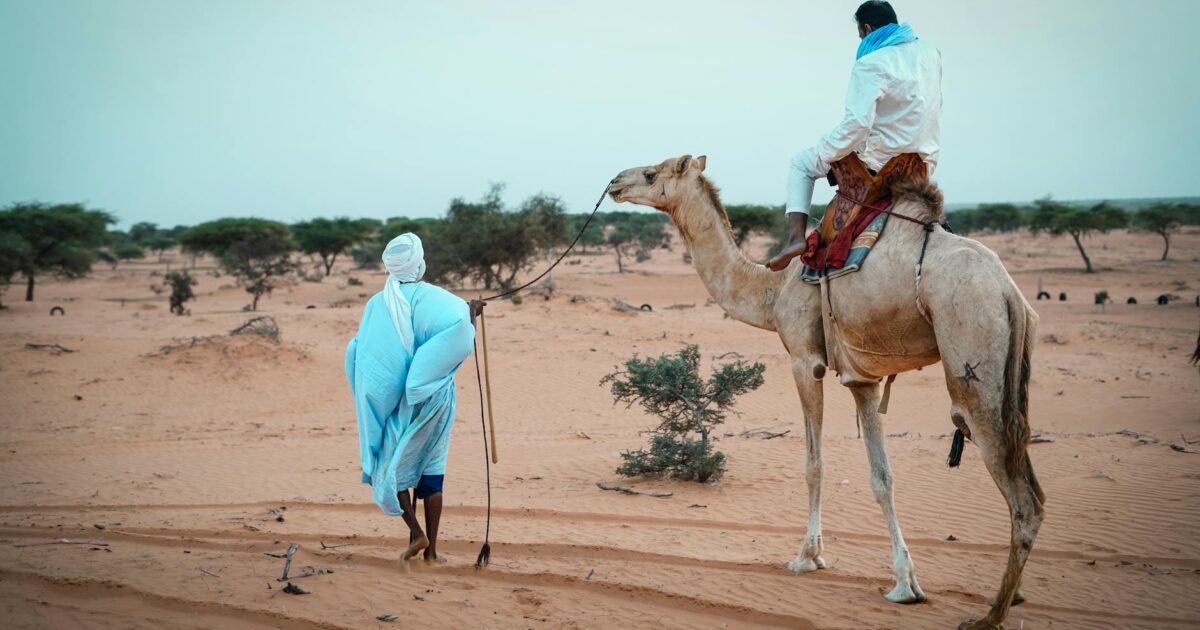
In the scorching deserts of Mauritania, a lone guardian is fighting to preserve the country’s rich cultural heritage. Chinguetti, a town once renowned for its ancient library, is home to a vast collection of rare Islamic texts that attract scholars from around the world. However, the harsh desert environment and lack of resources threaten the very existence of these precious manuscripts. According to a report by the United Nations Educational, Scientific and Cultural Organization (UNESCO), over 70% of Mauritania’s ancient texts are in danger of being lost forever due to the extreme climate conditions.
- Chinguetti’s ancient library is home to a vast collection of rare Islamic texts, including manuscripts dating back to the 13th century.
- The town’s harsh desert environment and lack of resources pose a significant threat to the preservation of these texts.
- A lone guardian, dedicated to protecting the manuscripts, is working tirelessly to ensure their survival and make them accessible to scholars and researchers.
Introduction to Chinguetti’s Ancient Library
Chinguetti’s ancient library is a treasure trove of Islamic knowledge, with manuscripts covering a wide range of subjects, including theology, law, medicine, and astronomy. The library’s collection includes works by renowned Islamic scholars, such as Ibn Sina and Ibn Rushd, and is considered one of the most significant repositories of Islamic texts in the world. According to Dr. Ahmed Salem Ould Ahmed, a leading expert on Islamic manuscripts, “Chinguetti’s library is a unique window into the intellectual and cultural heritage of the Islamic world, and its preservation is of utmost importance for future generations.”
The History of Chinguetti’s Library
Chinguetti’s library has a rich history dating back to the 13th century, when the town was an important center of Islamic learning and scholarship. The library’s collection was amassed over the centuries, with manuscripts being donated by wealthy patrons and scholars. However, the library’s fortunes began to decline in the 19th century, as the town’s importance as a center of learning began to wane. Today, the library is a shadow of its former self, with many of its manuscripts in a state of disrepair.
The Challenges Facing the Library
The library faces numerous challenges, including the harsh desert environment, lack of resources, and limited access to funding. The extreme temperatures and humidity levels in the desert pose a significant threat to the manuscripts, causing them to deteriorate rapidly. Additionally, the library lacks the necessary equipment and expertise to properly conserve and digitize the manuscripts, making it difficult to preserve them for future generations. As noted by
“The preservation of Chinguetti’s library is a daunting task, requiring significant resources and expertise. However, it is a challenge that we must rise to, in order to protect this invaluable cultural heritage.”
— Dr. Mohamed Vall Ould Cheikh, Director of the Mauritanian Ministry of Culture
The Guardian of Chinguetti’s Library
The lone guardian of Chinguetti’s library is a dedicated individual who has devoted his life to protecting the manuscripts and making them accessible to scholars and researchers. According to
“I have to protect them, it’s my duty. These manuscripts are a part of our cultural heritage, and it’s our responsibility to preserve them for future generations.”
— Abdallahi Ould Mohamed, Guardian of Chinguetti’s Library
The guardian works tirelessly to conserve the manuscripts, using traditional techniques passed down through generations to repair and restore the delicate pages.
The Importance of Preservation
The preservation of Chinguetti’s library is not only important for Mauritania, but also for the global community. The manuscripts contained within the library provide a unique insight into the intellectual and cultural heritage of the Islamic world, and their loss would be a tragedy of immense proportions. As noted by the UNESCO report, the preservation of cultural heritage sites like Chinguetti’s library is essential for promoting cross-cultural understanding and dialogue.
of Mauritania’s ancient texts are in danger of being lost forever due to the extreme climate conditions, according to a report by UNESCO.

What This Means Going Forward
The preservation of Chinguetti’s library is a complex and challenging task, requiring significant resources and expertise. However, it is a challenge that must be met, in order to protect this invaluable cultural heritage. As the world becomes increasingly interconnected, the importance of preserving cultural heritage sites like Chinguetti’s library cannot be overstated. By working together, we can ensure that these precious manuscripts are preserved for future generations, and that their contents continue to inspire and educate scholars and researchers around the world.
Frequently Asked Questions
Q: What is the significance of Chinguetti’s library?
Chinguetti’s library is a treasure trove of Islamic knowledge, with manuscripts covering a wide range of subjects, including theology, law, medicine, and astronomy. The library’s collection includes works by renowned Islamic scholars, and is considered one of the most significant repositories of Islamic texts in the world.
Q: What are the main challenges facing the library?
The library faces numerous challenges, including the harsh desert environment, lack of resources, and limited access to funding. The extreme temperatures and humidity levels in the desert pose a significant threat to the manuscripts, causing them to deteriorate rapidly.
Q: How can I help preserve Chinguetti’s library?
There are several ways to help preserve Chinguetti’s library, including donating to organizations dedicated to the preservation of cultural heritage sites, spreading awareness about the importance of preserving the library, and supporting initiatives aimed at digitizing and conserving the manuscripts.
Conclusion
The preservation of Chinguetti’s library is a complex and challenging task, requiring significant resources and expertise. However, it is a challenge that must be met, in order to protect this invaluable cultural heritage. By working together, we can ensure that these precious manuscripts are preserved for future generations, and that their contents continue to inspire and educate scholars and researchers around the world. As we look to the future, it is essential that we prioritize the preservation of cultural heritage sites like Chinguetti’s library, and work towards creating a world where knowledge and understanding are valued and protected.
The story of Chinguetti’s library serves as a reminder of the importance of preserving our cultural heritage, and the role that we all play in protecting it. As noted by
“The preservation of cultural heritage is a collective responsibility, and it requires the efforts of individuals, organizations, and governments around the world.”
— Irina Bokova, Former Director-General of UNESCO
By working together, we can ensure that the precious manuscripts contained within Chinguetti’s library are preserved for generations to come, and that their contents continue to inspire and educate scholars and researchers around the world.
In conclusion, the preservation of Chinguetti’s library is a critical task that requires immediate attention and action. By prioritizing the preservation of cultural heritage sites like Chinguetti’s library, we can help to promote cross-cultural understanding and dialogue, and ensure that the knowledge and wisdom contained within these precious manuscripts are preserved for future generations.




Leave a Comment